


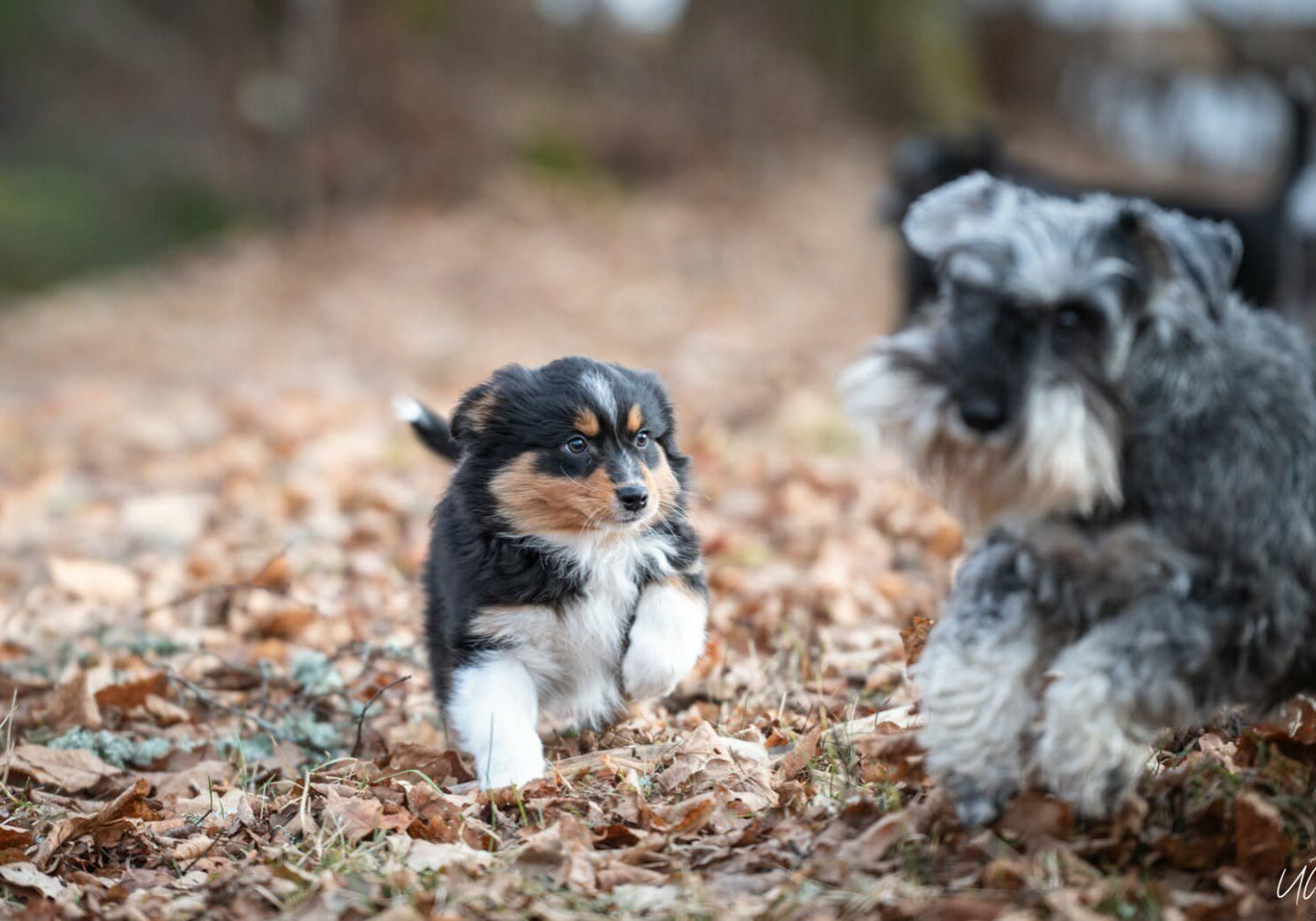
Puppy Training Step by Step – Your Guide to the First 6 Months
Bringing a new puppy home is amazing, but it can also feel overwhelming. So much happens in a puppy’s development during the first half-year, and it’s easy to get the “puppy blues” when teeth are biting and housebreaking takes time. Here is a clear, month-by-month guide on what is most important to focus on during your puppy’s first 6 months.
Why is the first half-year so important?
A puppy’s first few months are often called the socialization period. Everything the dog experiences as positive and natural now lays the foundation for the rest of its life. It’s not about hard training, but about building security.
Development step by step:
Months 2–3: Welcome home and security
The focus is entirely on socialization/environmental training, housebreaking, and getting to know your new family.
Scenario: The puppy pees on the rug indoors right after you’ve been outside, or whines as soon as you go to the bathroom.
What to do: Take it easy. The puppy’s bladder is tiny. Carry the puppy out after sleep, food, and play. Focus on building your role as a safe haven.
Months 3–4: Connection and everyday obedience
This is when the puppy is most receptive to learning how to cooperate with you.
Scenario: You call your puppy in the garden, but it has found an exciting stick and completely ignores your recall.
What to do: Reward spontaneous eye contact. Make yourself super interesting with meatballs or a fun toy so the puppy learns that choosing you always pays off.
Months 4–5: Loose leash walking and polite greetings
The puppy is getting stronger and more curious about the world, which is often noticeable on the leash.
Scenario: The puppy lunges forward and pulls on the leash as soon as it sees another person or dog on the walk.
What to do: Practice walking nicely for short periods. Reward when the leash is slack and teach the puppy that it doesn’t have to run up to everyone and everything.
Months 5–6: Alone training and the adolescent phase
The hormones are slowly starting to wake up and the puppy is becoming more independent. Now we consolidate the alone training.
Scenario: You leave the puppy alone for 10 minutes to take out the trash and come back to a chewed-up shoe or a sad puppy.
What to do: Take a step back in training. Alone training must be done in tiny steps (start with seconds) when the puppy is already tired and content.
4 golden rules for puppy training
Prioritize sleep: A puppy needs to sleep up to 18–20 hours per day. An overtired puppy bites pant legs, barks, and cannot concentrate.
Short sessions: Train for a maximum of 1–2 minutes at a time. That is more than enough for a puppy’s brain.
No punishments: Scolding a puppy only creates insecurity and fear. Reward the behavior you want to see more of instead.
Socialize in peace and quiet: Sit on a bench and watch cars, bicycles, and people without the puppy needing to greet them.
How long does it take?
Raising a puppy is a marathon, not a sprint. Some weeks it feels like everything is working, the next week the puppy has forgotten its own name. This is completely normal. Consistent and joyful training will yield results.
When is help needed?
It is always easier to prevent problems than to train them away later. Join a class if:
The puppy bites a lot and very hard, and you find it difficult to stop it.
You feel that the puppy is very stressed, fearful, or has trouble relaxing.
You want to get the right tools and support alongside other puppy owners.
A good puppy class gives you the absolute best start together.
Summary
The first period with a puppy is not about the dog being able to “sit pretty”, but about getting to know each other. By providing security, lots of sleep, and reward-based training, you build a stable foundation for a confident and happy adult dog.
Contact us if you want to book a puppy class or need advice with your new family member!